ZARVAN
Time as witness
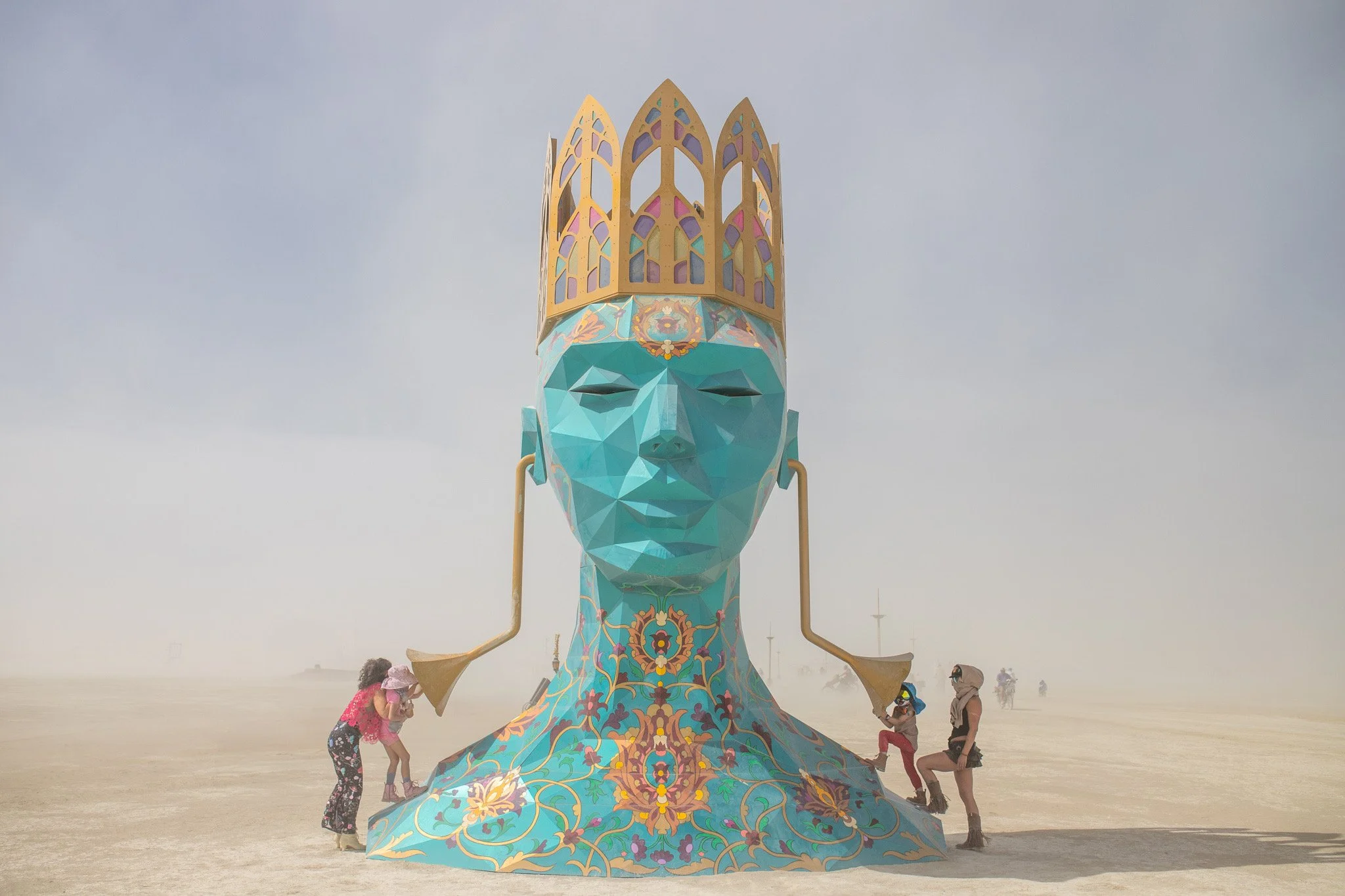
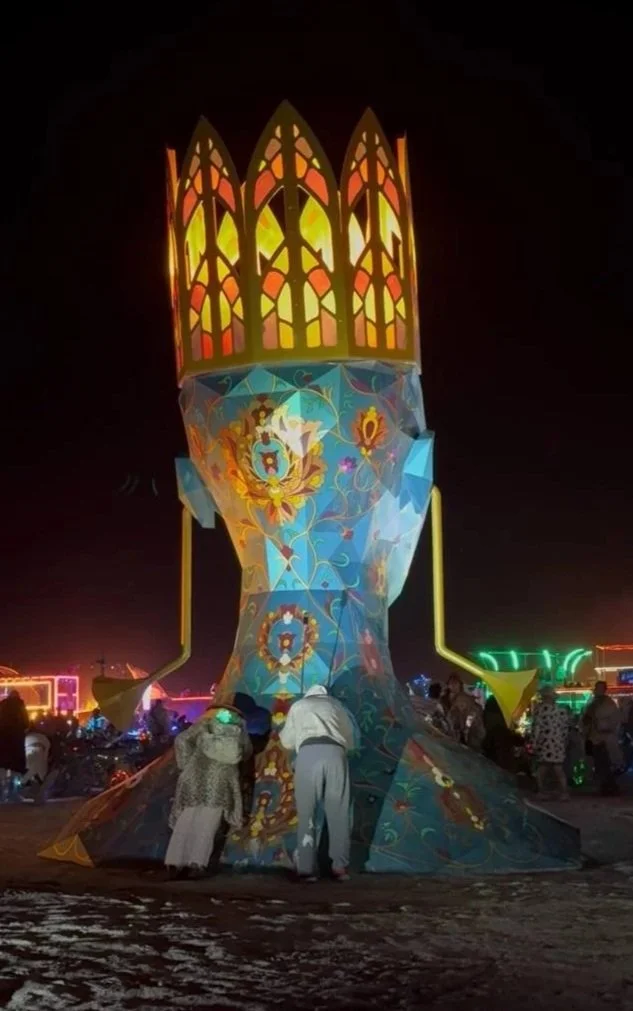
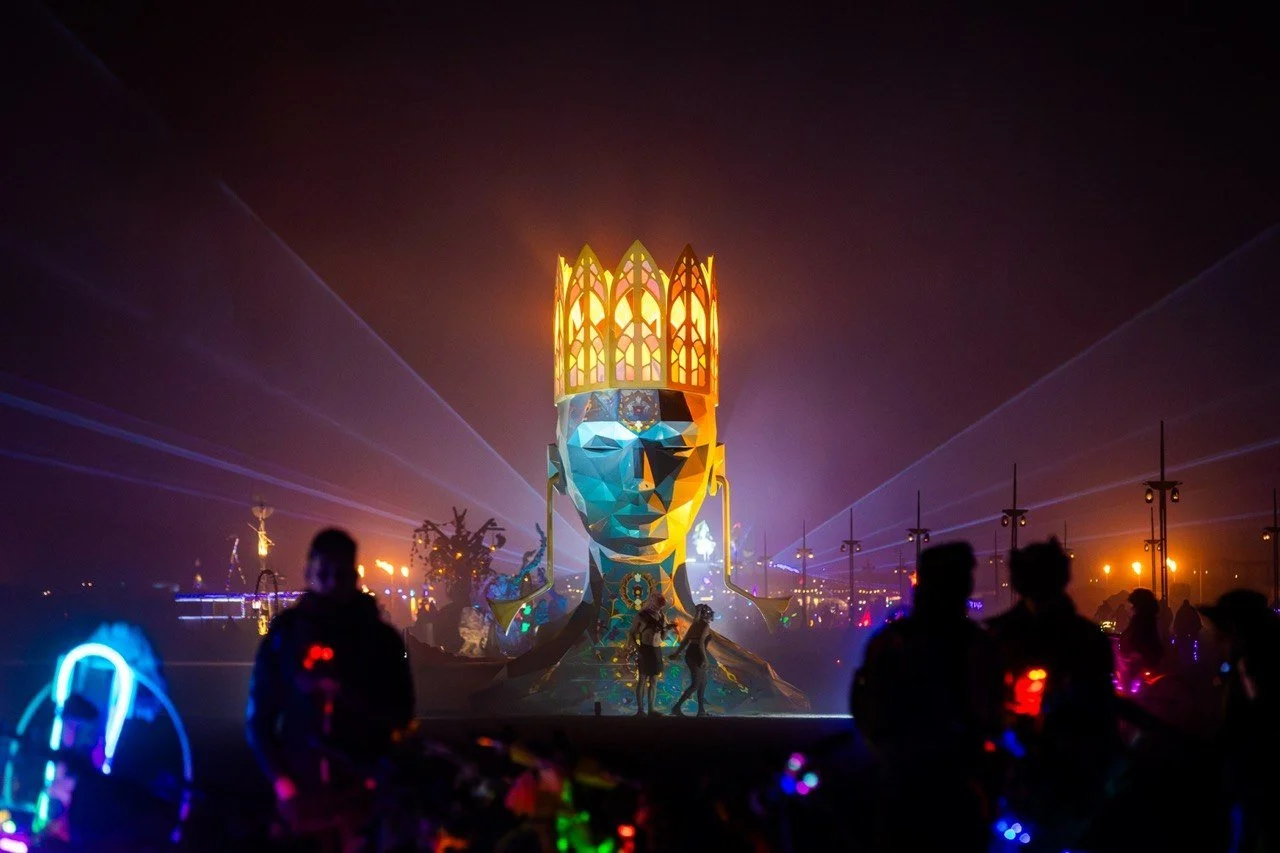
ZARVAN is a 23 foot interactive sculpture at urban scale that combines art, engineering, and human experience within a single structure. The work is designed as a living system: its illuminated crown responds to human presence and crowd density, its ears enable direct communication between individuals through acoustic speaking tubes, and periscopes embedded in the eyes allow visitors to experience the world from the perspective of this standing figure in the desert.
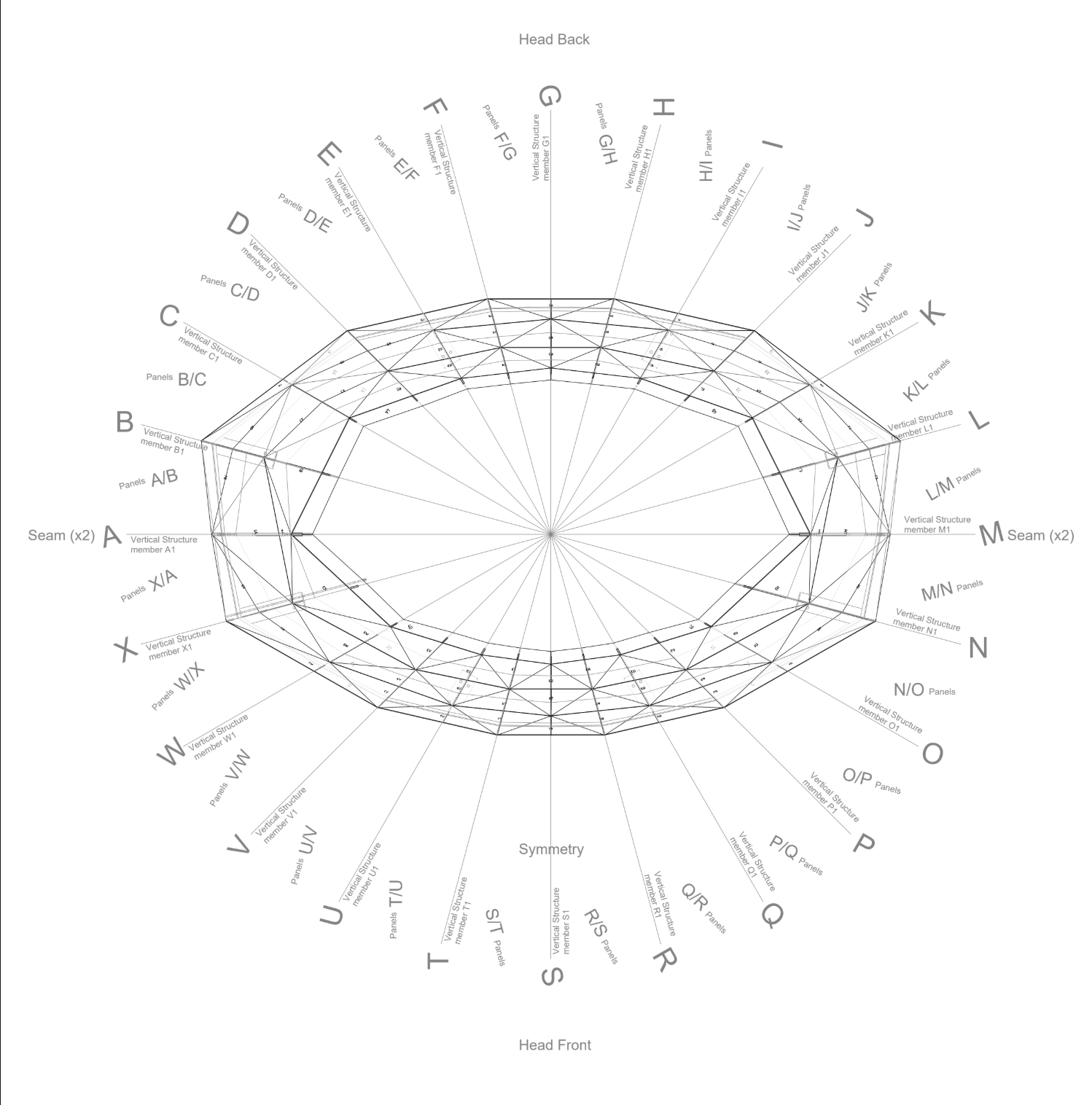
The form of ZARVAN draws from Persian carpet motifs and stained glass architectural inspiration within the crown, creating a synthesis of cultural heritage and contemporary geometric expression that embodies the concept of time in physical form. The structure is built with a modular steel skeleton and an off grid solar energy system, allowing it to operate independently in open public space and harsh environmental conditions.
ZARVAN is not merely a sculpture; it is a platform for experience.
The audience is not only a viewer but an active component of the work’s function. Light shifts in response to human presence, voices travel between strangers, and perspective is transformed. In doing so, ZARVAN activates a moment of pause, connection, and reconsideration of perception in public space, reminding us of time not as measured hours, but as lived experience.
Who is ZARVAN?
In ancient Persian tradition, ZARVAN is the god of time and the embodiment of one of the most fundamental concepts in Persian cosmology. Yet ZARVAN is far more than a mythological figure or a simple deity of time. He represents primordial, infinite time: a force that exists before creation, before duality, and before the material world takes form. In this worldview, time is not understood merely as a tool of measurement, but as an originating and foundational condition of existence itself, an invisible horizon within which being becomes possible. Rooted in deeply ancient and pre Zoroastrian layers of Persian thought, ZARVAN reflects one of the most profound expressions of how Persian culture has imagined origin, continuity, and the order of the cosmos.
Why I Chose ZARVAN
ZARVAN represents one of the most profound and lesser-known concepts within Persian heritage: time not as something measured, but as the primordial condition of existence itself. In ancient Iranian cosmology, ZARVAN is associated with boundless time, the unseen continuum that exists before creation, before duality, and before the visible world takes form. That idea deeply resonates with my practice. My work often explores perception, presence, memory, and the invisible systems that shape human experience. Naming this sculpture ZARVAN grounds the project in a cultural and philosophical lineage that is both deeply personal and universally human. It becomes a way to bring an ancient Persian cosmology into contemporary public space, not as a historical reference, but as a living framework through which light, sound, structure, and interaction can express time as something felt, shared, and embodied.
Why It Matters
ZARVAN matters because it introduces a rarely represented dimension of IRANIAN heritage into the global language of contemporary public art. By translating an ancient cosmology of infinite time into an engineered, interactive sculpture, the work creates a bridge between cultural memory and future facing design. It repositions public sculpture as an embodied experience rather than a static monument, where light, sound, and human presence generate meaning in real time. Socially, it fosters pause, encounter, and collective awareness in shared space. Conceptually, it offers a new framework for how identity, mythology, and technology can coexist in large scale civic art. Designed as a durable modular system, ZARVAN is intended not only for temporary installation, but as a legacy work with long term placement potential in public and cultural environments.
ZARVAN is not an object. It is a vantage point.
✳︎
ZARVAN is not an object. It is a vantage point. ✳︎

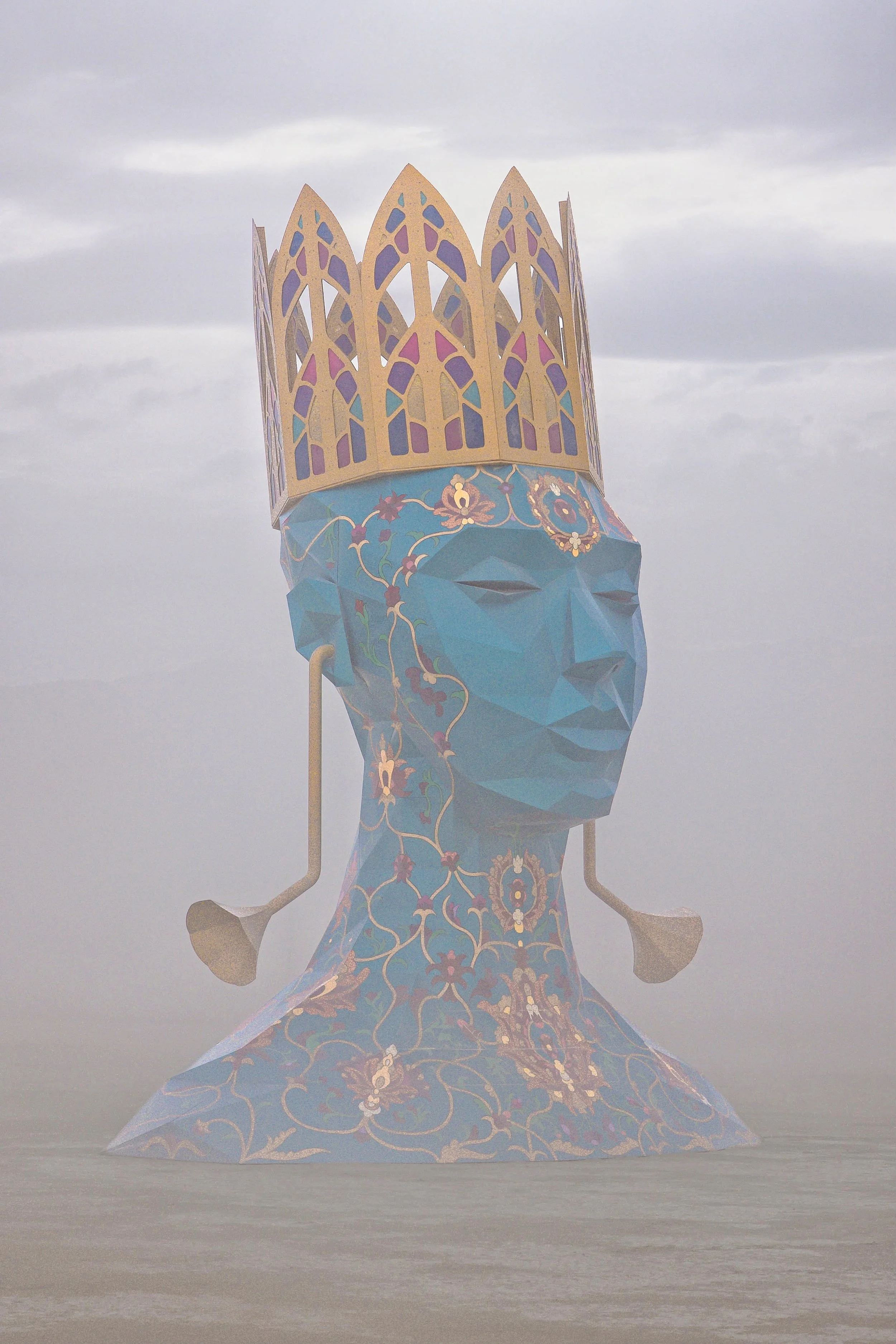
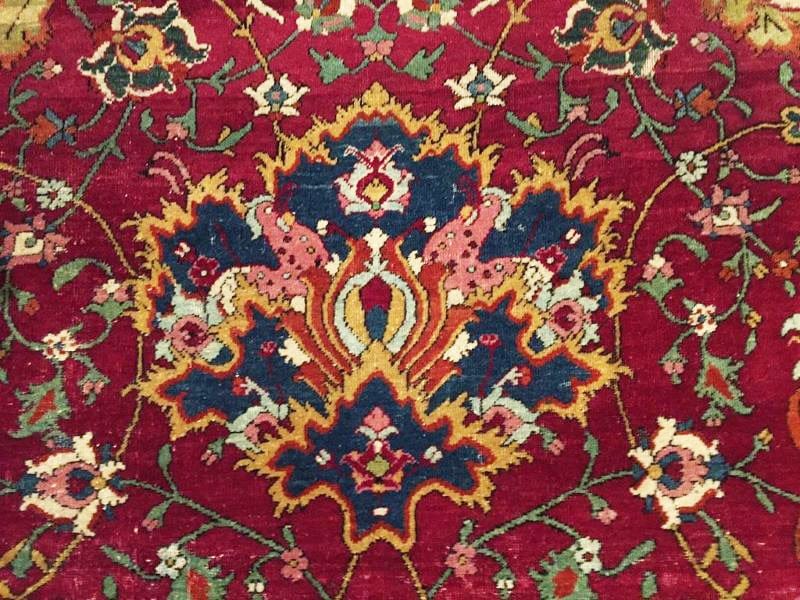
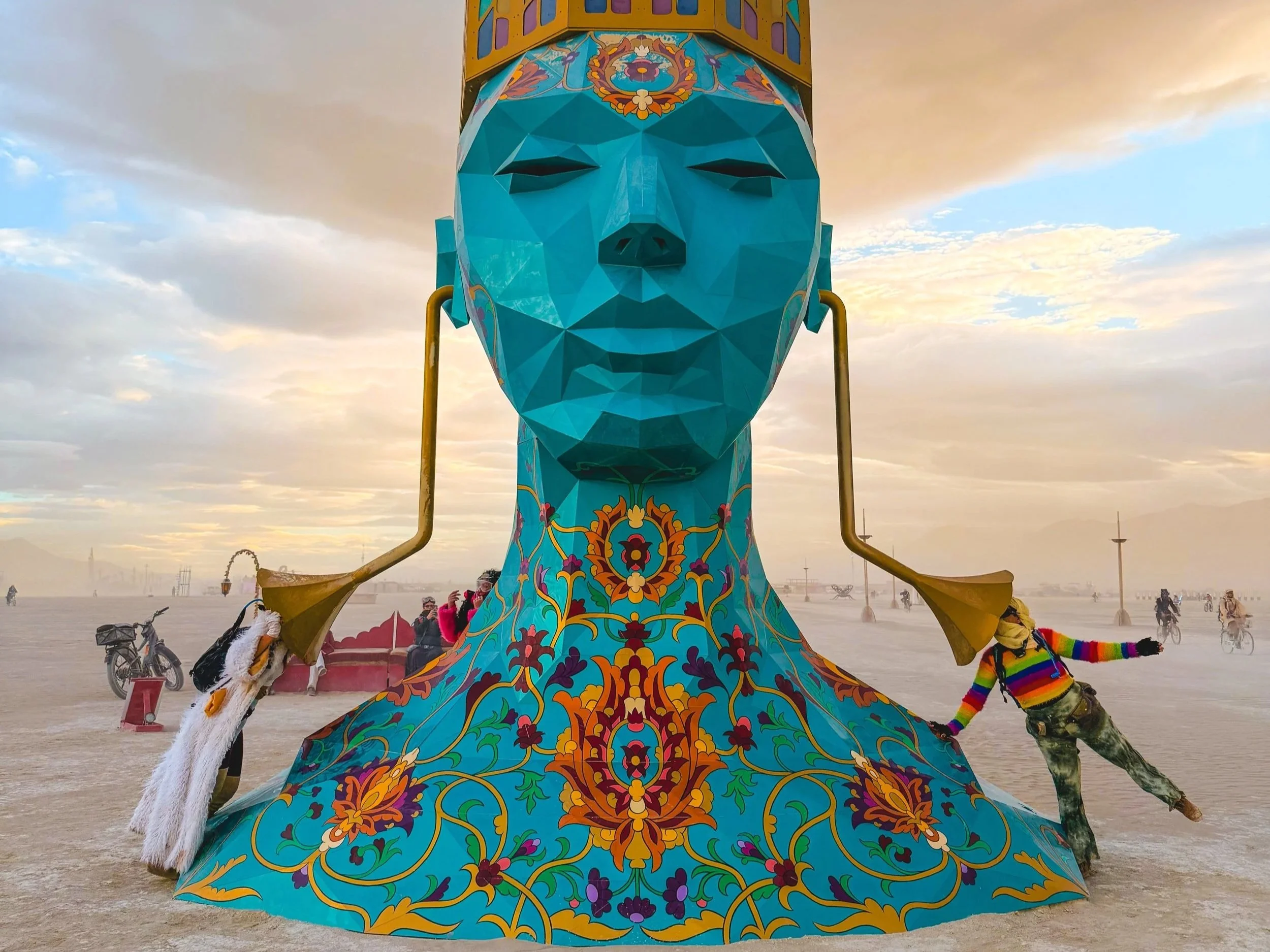
ZARVAN stands upon a body covered with Persian carpet motifs; patterns that are not merely decorative, but carry a conceptual and cultural structure within the form itself. In Persian tradition, a carpet is not simply a functional object; it is a map. A map of order, symmetry, centrality, and cosmos. Many classical carpets are structured like gardens and geometric systems that recreate the world in a comprehensible and balanced form. Center, border, repetition, and equilibrium all express an order that emerges from complexity.
ZARVAN stands upon a body articulated with Persian carpet motifs. In Persian culture, a carpet is not merely decorative but a symbolic map of order, symmetry, and cosmos. These patterns carry cultural meaning and reflect systems of balance, repetition, and structure that have evolved over centuries.
The motifs on ZARVAN are digitally designed and projected onto the faceted steel surface using projection mapping. This technique allows the patterns to be hand drawn with high precision while accurately following the geometry of the steel panels. The process combines digital alignment with manual craftsmanship, ensuring that the motifs remain faithful to the original design while integrating seamlessly with the structural form.
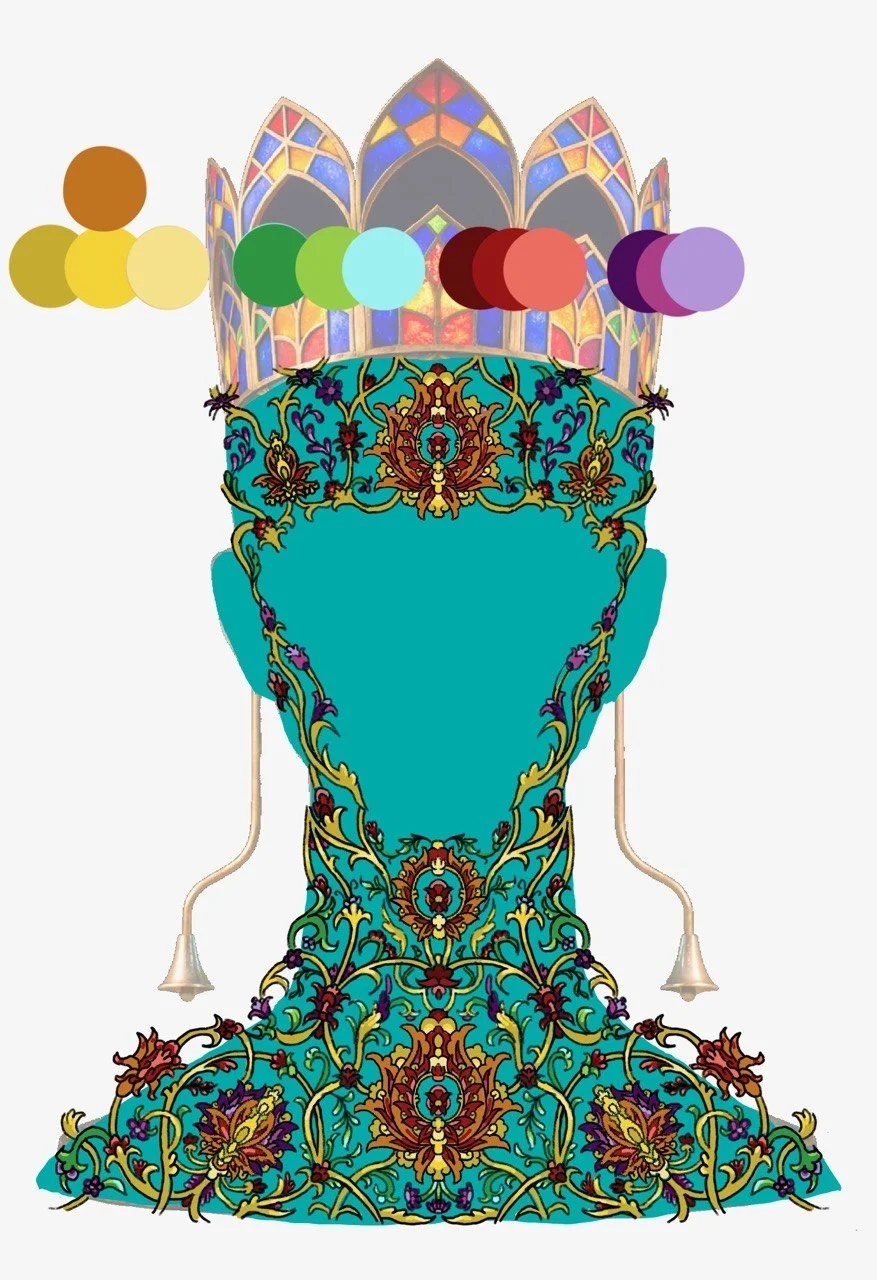
The result is a dialogue between traditional cultural ornament and contemporary industrial fabrication.
Persian rug geometry becomes embedded within a faceted steel body, while the stained glass crown opens upward toward light.
Through this synthesis, ZARVAN carries cultural memory while existing as a contemporary engineered structure, transforming pattern into both surface and meaning.
See Through the Eyes
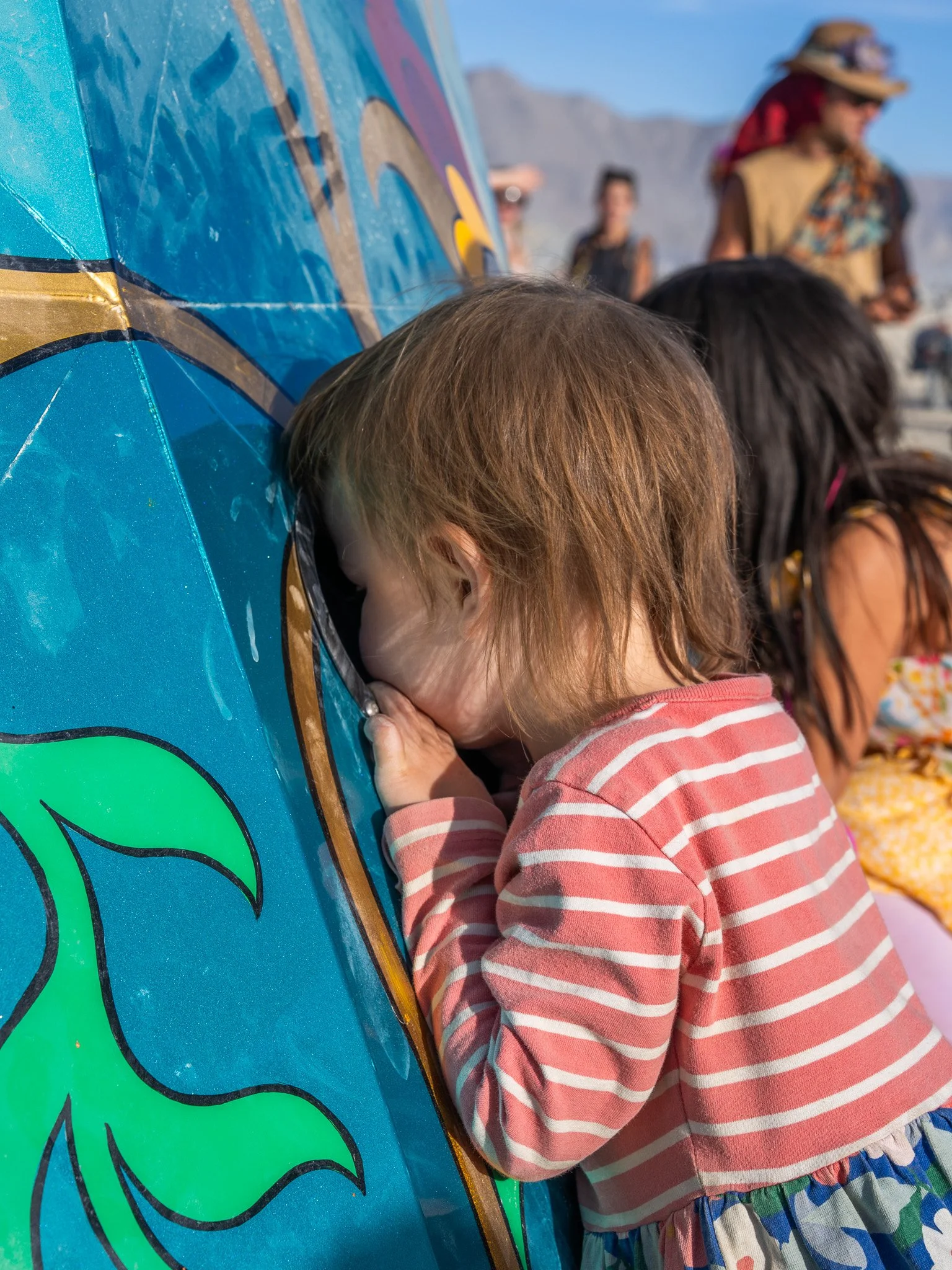
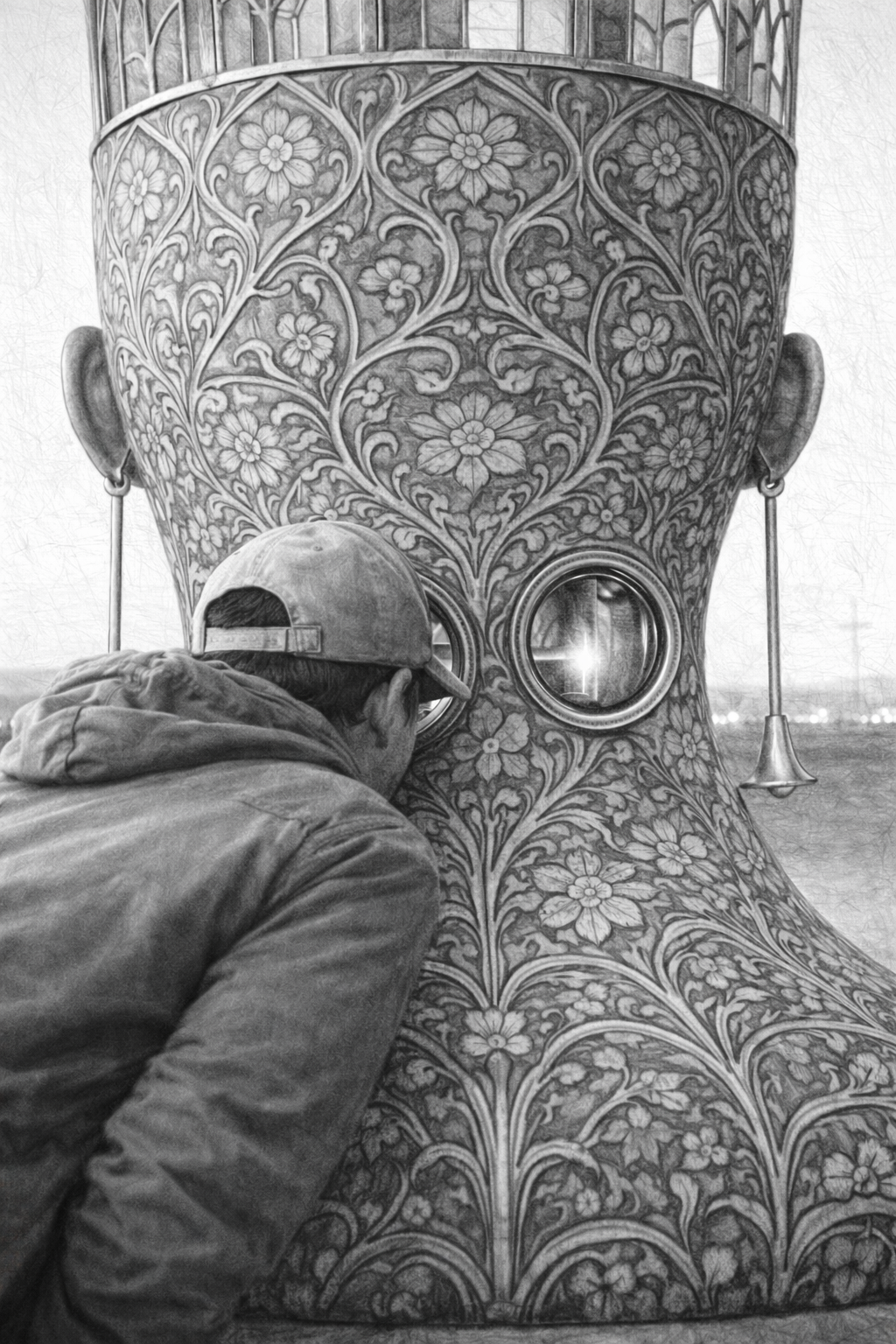
Rear viewing windows connect to internal periscopes precisely aligned with the eyes. Participants experience the surrounding environment from ZARVAN’s perspective, creating a literal shift in viewpoint and awareness.
ZARVAN’s periscopes activate a displacement of perception. By positioning themselves within the eyes of this 25 foot structure, viewers observe the world from a nonhuman scale and momentarily step outside their ordinary physical and psychological position. This shift in perspective creates not only visual curiosity but also a reversal of roles, as the spectator becomes the eye of the work. In this process, the individual is simultaneously observer and participant within the scene being viewed.
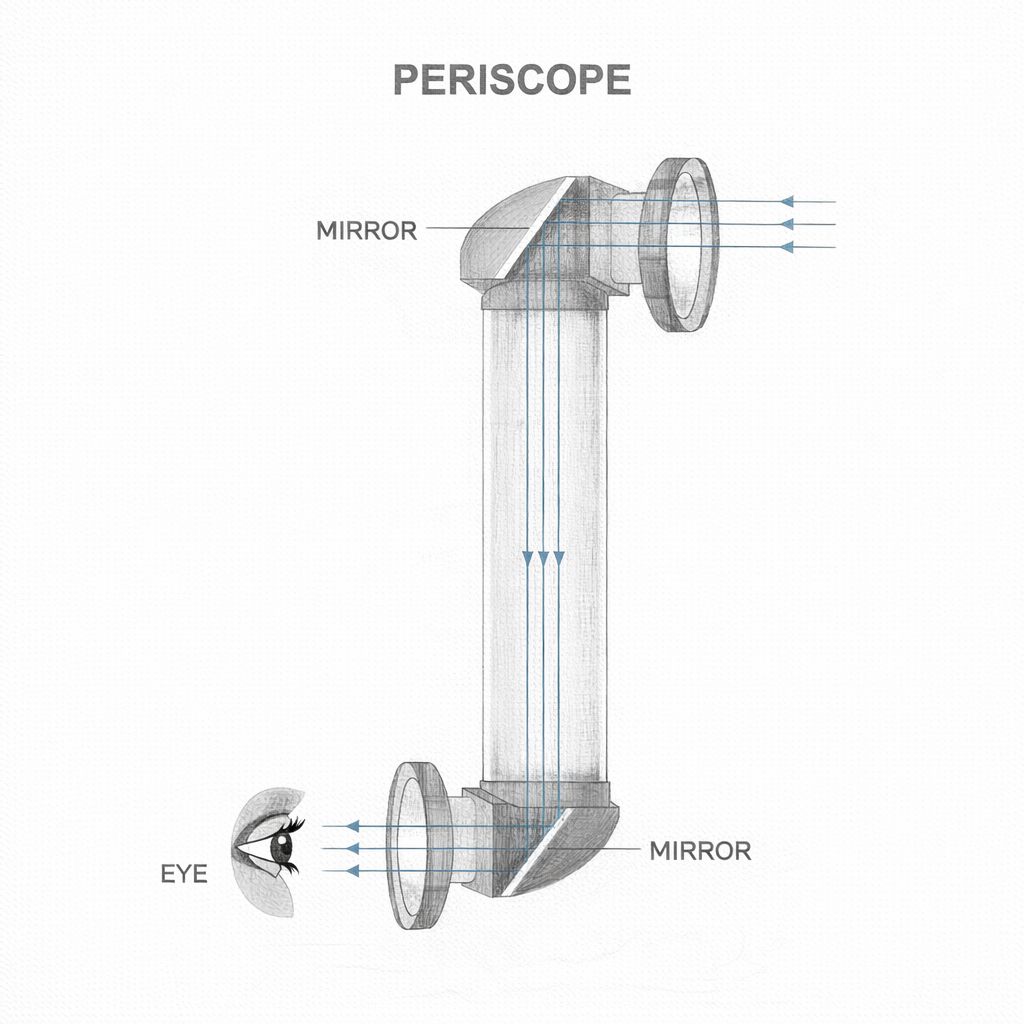
The periscope, as a simple optical instrument, becomes a catalyst for dialogue, pause, and social interaction. People gather around it, questions are asked, and the act of seeing transforms into a shared experience. Through this element, ZARVAN evolves from a static object into a participatory system that redefines perception, presence, and human connection in public space.
Speak Through the Ears
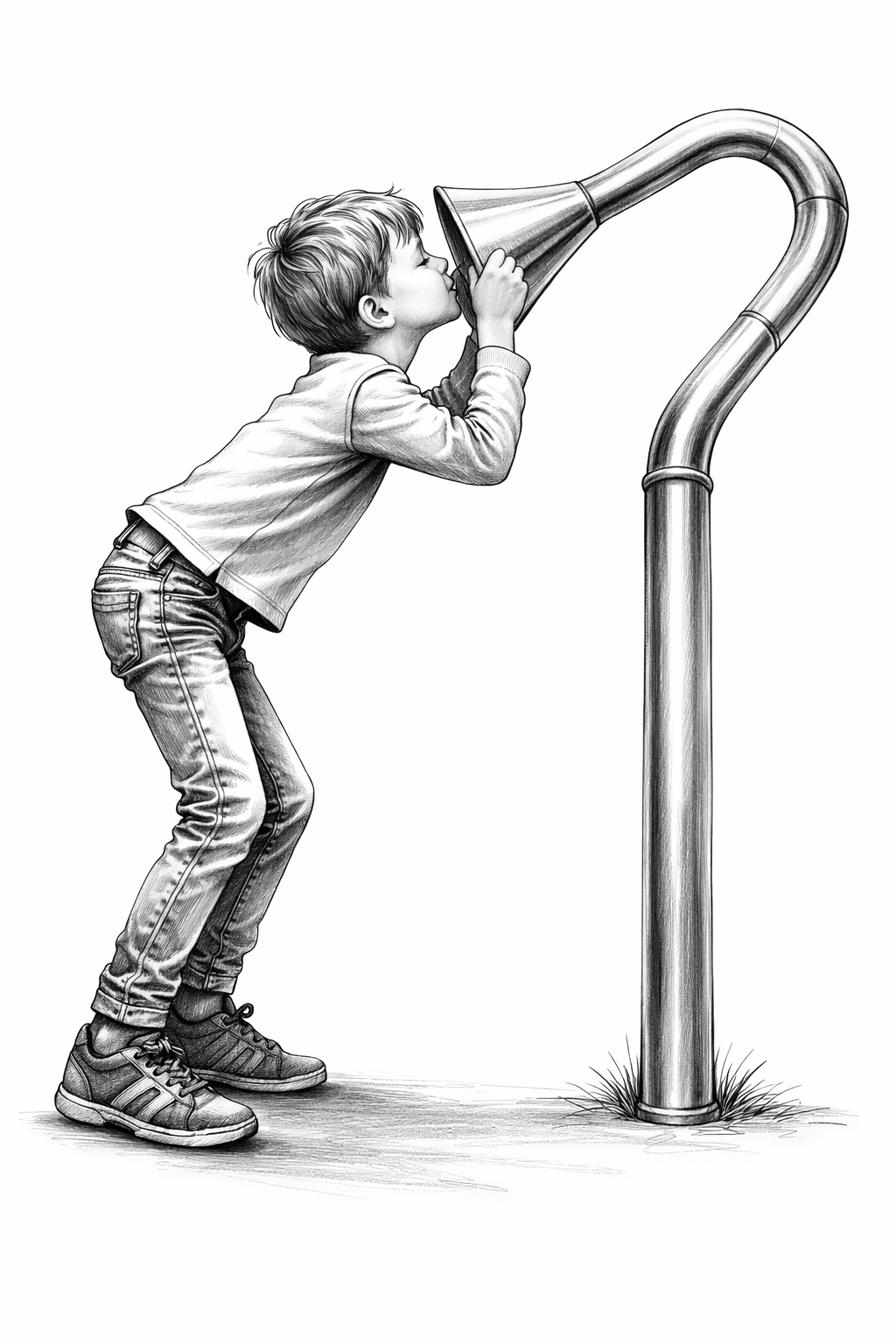
Integrated acoustic speaking tubes allow direct communication between individuals standing on opposite sides of the sculpture. The system is analog, durable, and requires no electronics, encouraging spontaneous human connection.
ZARVAN’s ears function as acoustic speaking tubes, creating a direct and intimate channel of communication between individuals standing on opposite sides of the sculpture. Embedded within the ear structures, the tubes operate through a simple mechanical principle, transmitting voice naturally without amplification or electronic mediation.
When one person speaks into the tube, their voice travels physically through the body of the sculpture and emerges at the opposite ear. This creates an unexpected private exchange within a public environment. Strangers become participants in a shared moment.
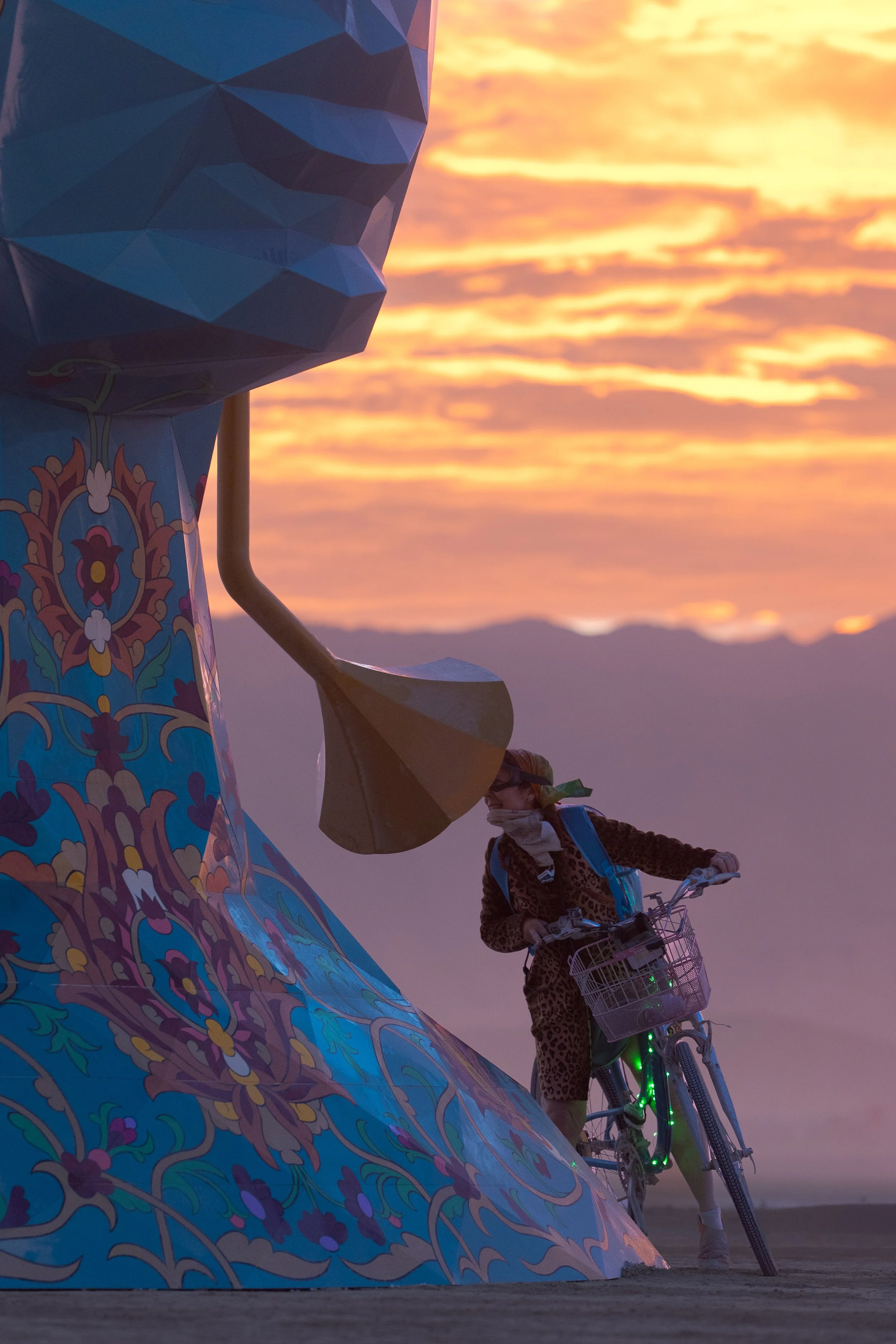
The speaking tubes transform ZARVAN from a purely visual experience into a relational system. The work does not only look back at the world through its eyes; it also listens and carries human voices across its structure. In doing so, it activates curiosity, play, and conversation, encouraging human connection through a tactile and analog mechanism embedded within a monumental form.
the crown
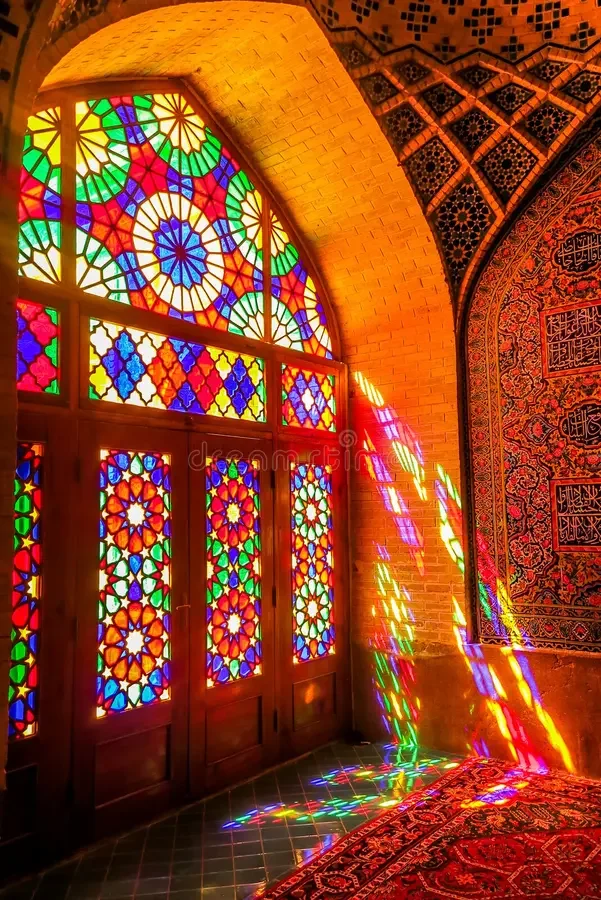
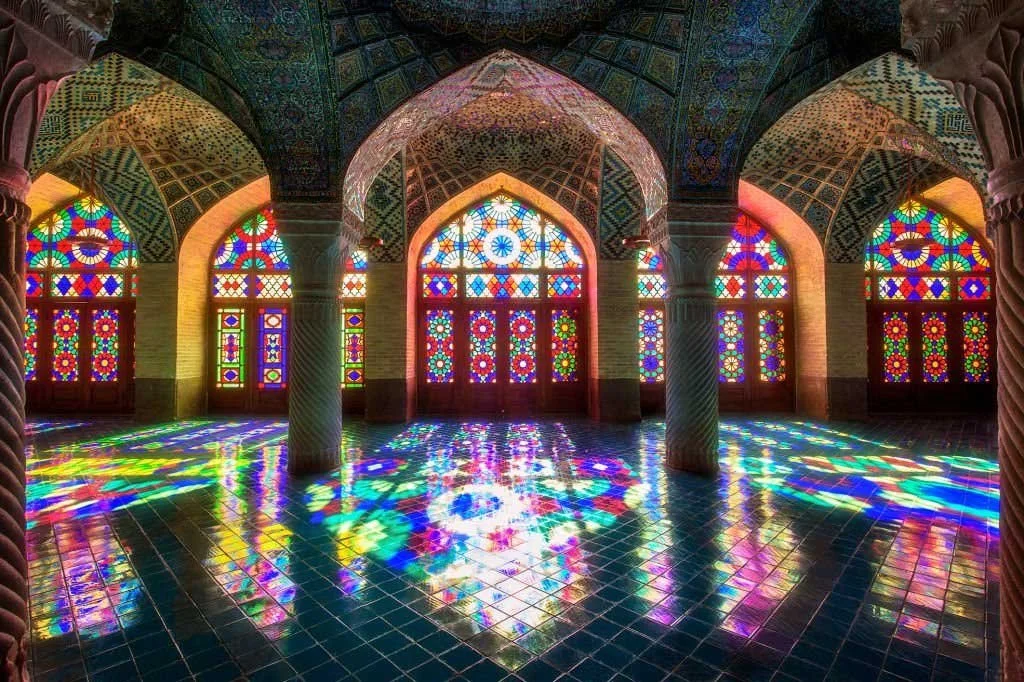
ZARVAN’s illuminated crown draws inspiration from the stained glass windows of traditional Persian architecture, where geometry, color, and light come together to transform space. These vibrant windows have long filled Persian interiors with shifting patterns of color, creating an atmosphere of beauty, reflection, and wonder.
The crown carries this visual language into a contemporary monumental form. Its illuminated colors evoke the richness of Persian stained glass, allowing light itself to become part of the sculpture’s cultural expression. Rising above ZARVAN, the crown becomes a luminous connection between Persian artistic heritage and contemporary art, honoring a centuries old tradition through a new architectural language.
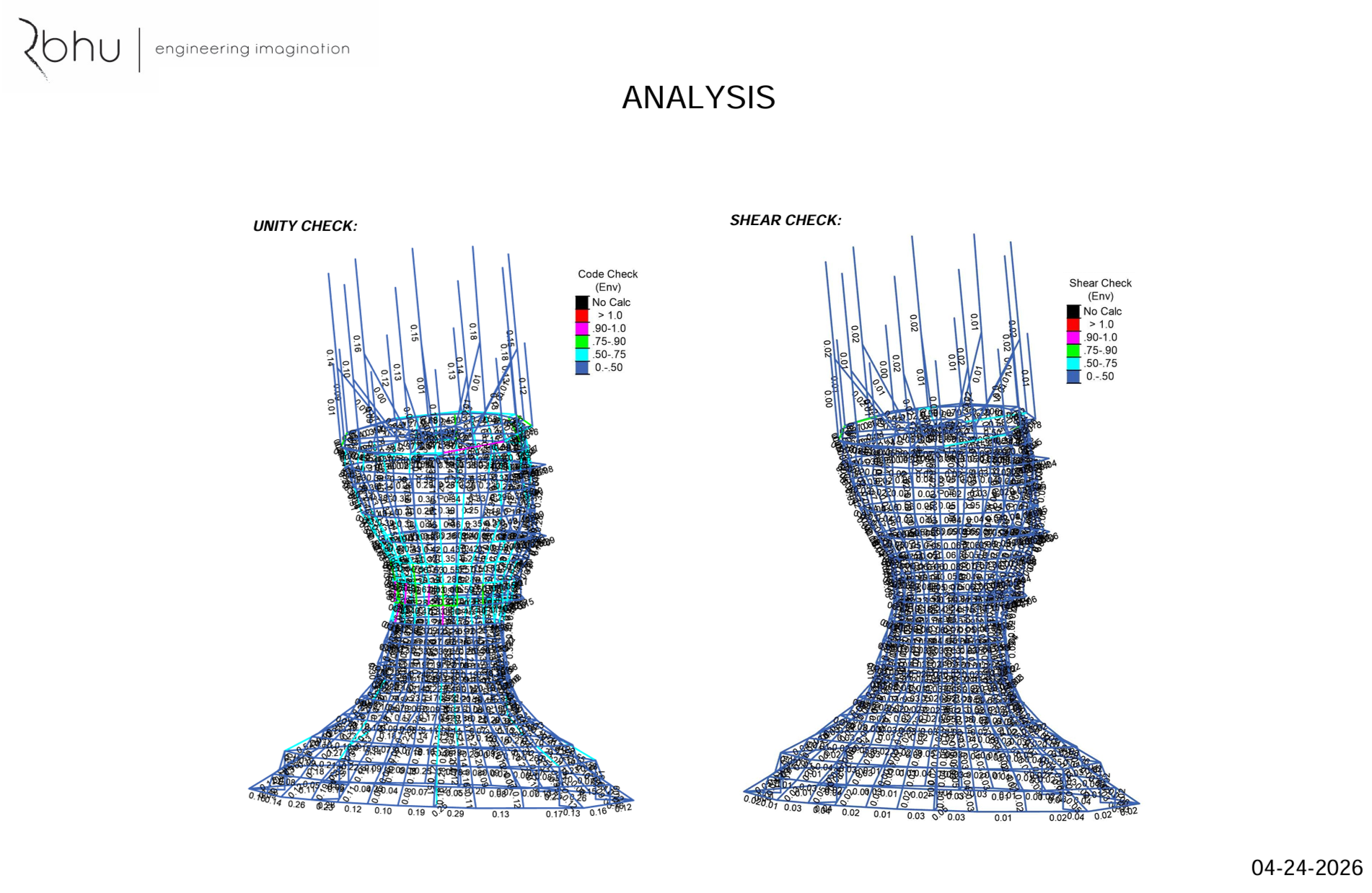
Engineering & Fabrication